

Data Analytics
Data Platforms
Data Science
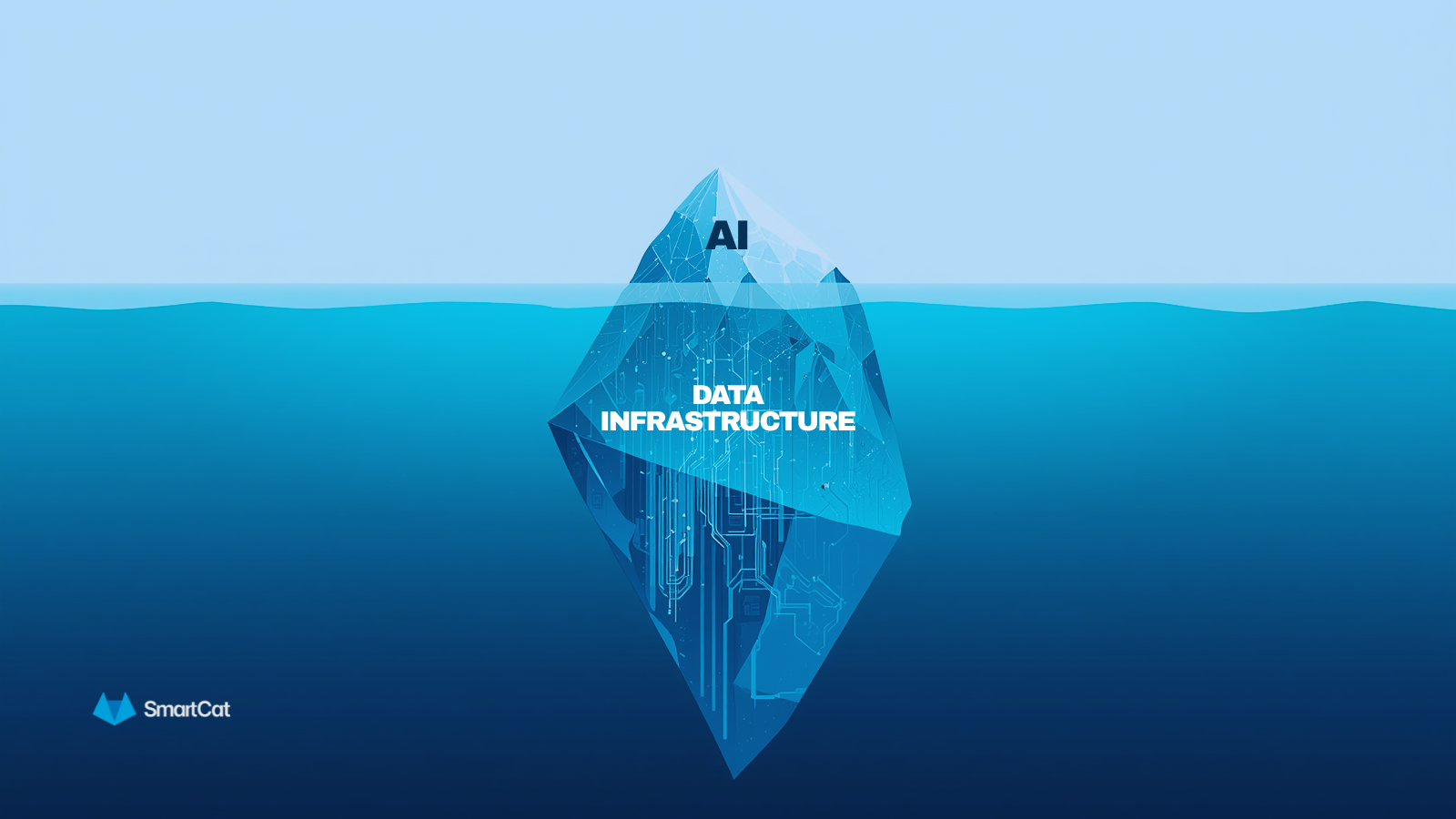
There Is No Data Shortcut: AI Requires Foundations That Cannot Be Built Overnight



This article was originally published in the Serbian tech magazine Internet Ogledalo, and its special edition “DATA 2026: The Power of Data in the AI era”.
You can find the Serbian version at Internet Ogledalo.
Here is what organizations expect from artificial intelligence in 2026: management wants higher productivity, faster decision-making, and the automation of complex processes. IT teams are tasked with finding applications that can deliver results in real business environments. CFOs want to see a clear impact on costs, risk, and operational efficiency.
In practice, however, the question is increasingly not only, “What can we do with AI?” but also, “Are our data foundations good enough to support what we expect AI to do?”
An AI model can certainly generate an answer, recommendation, report, or proposed decision. But the quality of that output depends on the data it can access, the context it understands, the process it operates within, and the controls surrounding its work.
When data is scattered across systems, inconsistent, outdated, or lacks clear ownership, AI will not solve the problem. At best, it will present it more elegantly. At worst, it will accelerate poor decisions.
That is why 2026 will not belong to companies that simply “have AI.” It will belong to those that know where their data is, what it means, who trusts it, who uses it, and how it is turned into a business decision.
Data Is No Longer Only a Technology Issue
For a long time, data was treated as a technical concern: databases, warehouses, integrations, reports, and tools. Today, that perspective is too narrow.
Data has become a question of business models, decision-making speed, regulatory compliance, customer experience, and a company’s ability to introduce AI without unnecessary risk.
A CEO does not need to understand how a data pipeline works, but they do need to know whether the company has a sufficiently stable foundation for the next wave of automation.
A CFO does not need to design a data platform, but they should understand why competing versions of the same report slow decisions, increase costs, and undermine trust.
CIOs and IT managers can no longer view data infrastructure as internal technology alone, because the pace and success of digital investment now depend directly on it.
In the AI era, data is a shared responsibility between business and technology teams. The difference between successful and unsuccessful initiatives is increasingly determined before a model, tool, or platform is chosen.
It comes down to whether the organization can answer a few fundamental questions:
Which data is critical? Who owns it? How is its quality verified? Where is it used? Which decisions depend on it?
Without clear answers, AI projects tend to remain demonstrations. They may look impressive in a controlled environment, but they struggle to fit into everyday work, where there are exceptions, responsibilities, legacy systems, regulatory requirements, and people who need to trust the result.
“When data is scattered across systems, inconsistent, outdated, or lacks clear ownership, AI will not solve the problem. At best, it will present it more elegantly. At worst, it will accelerate poor decisions.”
From Reports to Intelligent Workflows
The first phase of data-driven business was reporting. Companies wanted to understand what had happened.
The second phase was analytics: understanding why something had happened and what might happen next.
We are now entering a phase in which data is used to power intelligent workflows.
This means that data no longer sits inside a dashboard waiting for someone to open it. It becomes part of the process itself. A system identifies a change, retrieves the relevant context, recommends the next step, alerts the responsible person, or initiates an automated action—with human oversight wherever it is required.
Consider a financial process such as cost analysis or month-end close. Traditionally, teams manually review variances, search for errors, compare information across systems, and prepare explanations for management.
With the right data foundation and an AI layer, the system can automatically identify unusual changes, connect them to relevant transactions, prepare an explanation, and flag the cases that require human review.
The value does not come from AI “writing the report.” It comes from reducing the time required to reach a reliable business interpretation.
The same applies to sales, customer support, procurement, logistics, HR, and inventory management.
The greatest potential does not lie in an isolated chatbot. It lies in systems that understand data, business context, and process rules. At that point, AI no longer sits alongside the work as an additional tool. It becomes part of how the work gets done.
Data Quality Is a Question of Trust
In many companies, data problems do not appear particularly serious until the organization attempts a meaningful AI implementation.
People are accustomed to checking a report manually, calling a colleague in another department, correcting an Excel spreadsheet, bypassing a system, or relying on personal experience. These small compromises can continue for years because people fill the gaps in the process.
AI does not have access to that informal context unless it is explicitly provided.
It does not know which source is considered the most accurate unless the organization has defined it. It does not know how exceptions should be handled if those rules exist only in employees’ heads. It cannot tell whether a field is outdated, duplicated, or being used incorrectly without a layer of quality management.
Data governance should therefore not be viewed as an additional layer of bureaucracy. It is a prerequisite for trust.
A company needs to know which data it uses, under what conditions, for which decisions, and with what level of control. This becomes particularly important when AI begins to influence credit assessments, pricing, recommendations, hiring, customer communications, or operational priorities.
Trust does not come from claiming that a system is “intelligent.” It comes from the ability to verify, explain, and, when necessary, challenge its output.
In a business environment, AI must be useful, but it must also be accountable. Organizations therefore need mechanisms for monitoring quality, managing access, protecting sensitive information, recording decisions, and clearly dividing responsibility between people and systems.
AI Infrastructure Is About More Than Computing Power
Discussions about AI infrastructure often begin with cloud environments, GPUs, high-performance computing platforms, or the capacity to process large volumes of data.
These elements matter, particularly for companies developing computationally demanding models or working with real-time processing. For many organizations, however, the decisive infrastructure is not only what enables a model to run faster.
It is the infrastructure that allows AI to work with the right data, inside the right process, and under the right rules.
In practice, this means stable data pipelines, clearly defined sources of truth, modern lakehouse or data warehouse architectures, integration with business systems, semantic layers that give data meaning, observability that reveals when something is not working as expected, and security controls that prevent irresponsible use.
Without these foundations, companies can easily fall into the tool-buying trap.
They introduce an AI solution, but the required data remains locked inside legacy systems. They build a prototype, but have no reliable way to deploy it in production. They launch an initiative, but business teams see no compelling reason to change how they work.
AI infrastructure in 2026 must be designed around business value, not around a technology trend.
The important question is not only, “Which platform are we using?” It is also, “Which process are we improving, which data does it require, how will we measure the result, and who will be accountable when the system becomes part of everyday work?”
Regional Companies Have an Opportunity, but Not by Copying Global Enterprises
Companies in Serbia and the wider region often do not have the budgets of global corporations. However, they have one important advantage: they can select specific problems more quickly and solve them pragmatically.
Instead of embarking on large transformation programs that take years, a more realistic path is to select several commercially important use cases in which the connection between data, AI, and a measurable outcome is clear.
This might include automating manual reporting, improving risk assessment, processing requests more quickly, creating more accurate customer segments, optimizing inventory, detecting anomalies, personalizing recommendations, or developing an internal AI agent that helps employees find knowledge across documents and systems.
The key is not to begin with the technology. The starting point should be a decision or process that creates unnecessary cost, delay, or risk.
A focused data workshop can then help the organization determine which data is required, how reliable it is, what needs to be integrated, which part of the work can be automated, and where people must remain in control.
This approach reduces risk and increases the likelihood that AI will move beyond the pilot stage and into production. It also helps management view digital investment not as an experiment, but as part of operational improvement.
“AI infrastructure in 2026 must be designed around business value, not around a technology trend. The important question is not only which platform a company uses, but which process it is improving, which data it requires, how the result will be measured, and who will be accountable when the system becomes part of everyday work.”
The New Competitive Advantage: Turning Data Into Action
Until recently, competitive advantage was associated with having more data. That is no longer enough.
Data is abundant. Its value depends on how quickly, accurately, and responsibly an organization can turn it into a decision or an action.
Doing that requires a combination of business understanding, data engineering, AI expertise, security, governance, and process design.
Building a model is not enough. Companies need to build systems that people actually use, that fit into existing operations, and whose performance can be measured through concrete business results.
For SmartCat, as a company that builds data and AI solutions, the most important lesson from our work is straightforward: AI projects succeed when they are treated as business systems rather than technology demonstrations.
The model is only one component of the solution. Data, integrations, controls, user workflows, and team adoption are equally important.
Data in 2026 should therefore not be viewed as a discussion about volume. It is a discussion about organizational maturity.
Companies that invest today in stable data foundations, clear data governance, and focused AI applications will be better positioned to reduce operational pressure, make decisions faster, and create new sources of value.
In the AI era, the question is no longer whether a company has data.
The question is whether it has a system that people can trust—and the ability to use that data to create a more intelligent way of working.
Related blog posts:

Introducing New Open-Source Model for Generating User Queries in E-commerce
In the dynamic world of e-commerce, search functionality is a crucial component of the user experience. When customers type queries like “blue Nike Air Force 1” into a search bar, they expect instant, accurate results. However, many existing language models (LLMs) designed to generate these queries are either too expensive or not optimized for real-world […]

|
Mar 12, 2025

AI Assistant
Talk to your data! Introducing CMA – AI chatbot powered by SmartCat
Using artificial intelligence, including large language models (LLMs) and methods like RAG (Retrieval-Augmented Generation), is changing how we work with data. Say goodbye to scrolling through endless Excel spreadsheets and going through ten procedures just to gain business insights. With AI, today we can interact with all available business data using text or voice queries, […]

|
Aug 23, 2024

Building Custom Transformers in PySpark for Smarter ML Pipelines
When working with big data, PySpark is commonly used for data preprocessing and transformation at scale. While built-in PySpark ML transformers like StandardScaler or StringIndexer handle many common tasks, real-world use cases often require custom transformations tailored to your data and domain. That’s where custom PySpark ML transformers come in, allowing you to embed custom […]

|
Jun 12, 2025